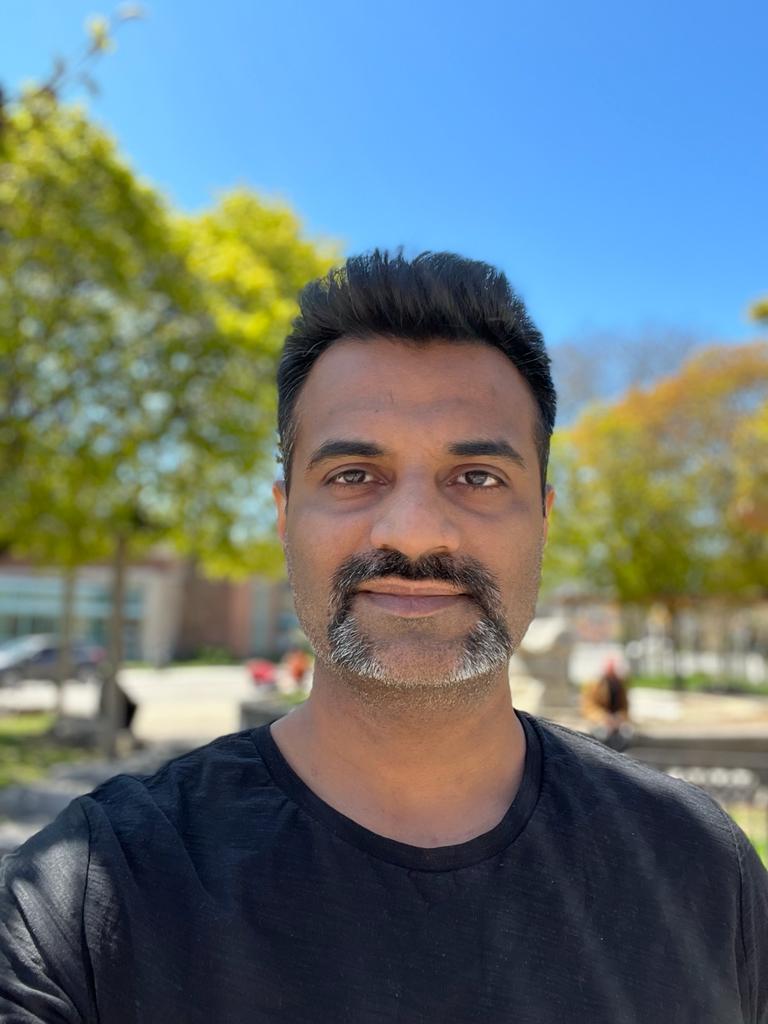
I like to explore fundamental problems and solve them from first principles — curious about ganit (गणित — mathematics), physics, and philosophy, and happiest in the seams between them.
Most of what looks like difficulty is really a missing abstraction. Find the right frame and a wall of special cases collapses into a single line.
What I’m curious about
mathematics · गणित
Structure, made certain
The scaffolding under everything else. It’s where I start when I want to be sure, not just persuaded.
physics
Where structure meets the world
The part that asks what the equations are actually claiming about the thing in front of you.
computation
Simple rules, wild behaviour
What can be computed, at what cost, and how to say it cleanly — mostly in functional languages. (That’s Rule 30 above, from one live cell.)
foundations
The assumptions underneath
Philosophy done carefully — the quiet premises the other three rest on, all the way down.
How I like to build
I prefer functional programming for the same reason I prefer first-principles reasoning: a pure function is an argument you can check. Same inputs, same answer; state made explicit; the type saying out loud what the code is allowed to do.
first_principles.ml
(* understanding, composed from small honest pieces *)letsolve (p :problem) :insight=
p |> from_first_principles |> reason |> distil
(* no hidden state; small pieces you can trust, composed *)let () =In_channel.input_lines stdin
|>List.map solve
|>List.iter print_insight
About Octallium
Octallium is where the writing lives: long reads on mathematics, physics, computation, and the foundations underneath them — free, and without a paywall. A small lab with a large scope, run on the belief that the fundamental questions are still the most interesting ones, and still worth doing carefully, in the open.
The lab also builds software under Active Flights; everything that ships is on the products page. If you’d rather read than build, the articles are the place to start — or send a note if something here sparks a thought.